By Alliance Home & Land Group
We walk through a lot of homes across Greensboro, and smart home technology comes up in almost every conversation now, whether it's a buyer asking what's already installed or a seller wondering what upgrades are worth making before listing. The best smart home features aren't about having every gadget available. They're about choosing the ones that genuinely improve daily life and hold their value. Here's what we point clients toward when they're deciding where to start.
Key Takeaways
- Smart locks and security systems now offer features like expiring guest codes and remote monitoring that go well beyond a basic alarm.
- Smart thermostats can meaningfully reduce energy costs by learning a household's schedule and adjusting automatically.
- Choosing a central hub and ecosystem early makes it much easier to add devices later without compatibility headaches.
- Video doorbells and cameras are a common upgrade buyers notice and ask about during showings.
Smart Locks and Security Systems That Actually Deter Intruders
Security is usually where people start when they're weighing the best smart home features, and the technology has come a long way from a simple keypad. Today's smart locks combine fingerprint recognition, PIN codes, and app-based access, so losing a phone or forgetting a code doesn't mean getting locked out. Guest access codes that expire automatically are especially useful for anyone who regularly has visitors, contractors, or house sitters coming and going.
What to Look for in a Smart Lock or Security System
- Multiple unlocking methods, including fingerprint, PIN, and app-based access
- Guest codes that expire automatically after a set time
- Integration with cameras, motion sensors, and alarms through a single app
- Real-time alerts and activity monitoring you can check remotely
- Encryption protocols that protect the data your security system collects
- The ability to arm, disarm, and adjust the whole system with a single voice command or app tap
Smart Thermostats That Pay for Themselves Over Time
A smart thermostat is one of the more practical upgrades a homeowner can make, since it learns a household's schedule and adjusts heating and cooling automatically when no one's home. Look for models that offer local control, meaning the thermostat keeps working even if the internet connection drops, along with detailed energy reports that show exactly where savings are coming from. Over time, those small automatic adjustments add up to a meaningfully lower utility bill without any extra effort from the homeowner.
What Makes a Smart Thermostat Worth Installing
- Learning capability that adjusts temperature based on your actual schedule
- Local control that keeps the system functioning without a constant internet connection
- Detailed energy usage reports that make savings easy to track
- Compatibility with major smart home platforms and voice assistants
- HVAC compatibility that works with your home's existing heating and cooling system
- Remote adjustment so you can change the temperature before you even walk in the door
Adaptive Smart Lighting for Comfort and Efficiency
Smart lighting has become one of the most common entry points into a broader smart home setup, and for good reason. Adaptive lighting, where bulbs adjust automatically based on the time of day or activity, is now standard on most systems, and LED smart bulbs and switches also bring real energy savings compared to traditional lighting. Being able to schedule lights to turn on and off while you're away adds a layer of everyday convenience on top of the security benefit.
What Smart Lighting Can Do for a Home
- Automatic adjustments based on time of day or room activity
- Scheduling that mimics your routine when you're away from home
- Dimming and color options for different moods or occasions
- Meaningful energy savings compared to traditional bulbs and switches
- Remote control through a mobile app from anywhere
- Easy integration with voice assistants for hands-free adjustments
A Central Hub That Ties Everything Together
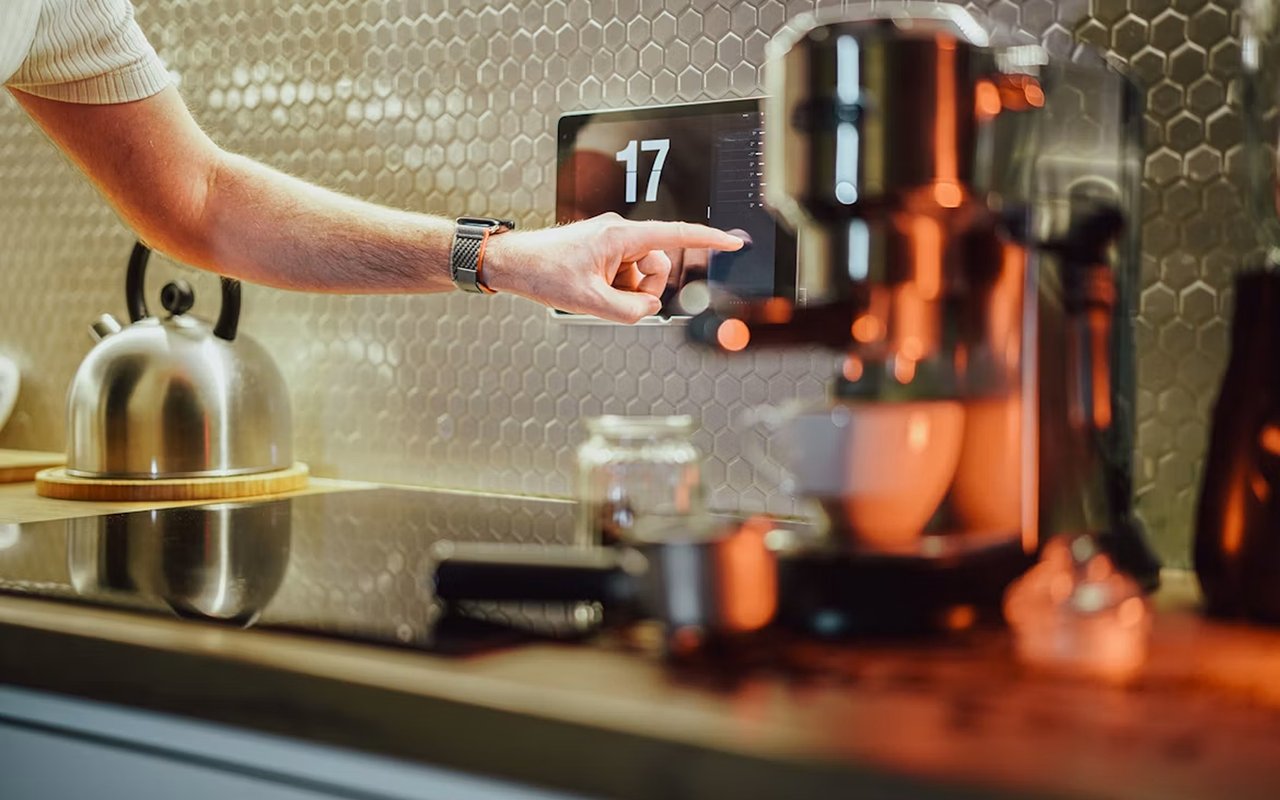
Every smart home device eventually needs to talk to the others, and that's where a central hub comes in. Most hubs today are smart speakers that also serve as a Thread border router, coordinating locks, lights, thermostats, and sensors from one place. Choosing a hub that supports Matter, an industry standard designed to help devices from different brands work together, makes it much easier to add new devices later without worrying about compatibility.
What to Consider When Choosing a Hub
- Support for Matter and Thread, which make cross-brand compatibility easier
- Compatibility with the ecosystem you already use, whether that's Alexa, Google Home, or Apple HomeKit
- The connectivity protocol each device relies on, since Wi-Fi, Bluetooth, Zigbee, and Z-Wave all behave differently
- Voice assistant integration if hands-free control matters to your household
- Room to expand the system gradually rather than buying everything at once
- A setup process simple enough that every household member can actually use it
Video Doorbells and Cameras for Everyday Peace of Mind
Video doorbells and security cameras are a genuinely useful addition to almost any home, offering visual verification of who's at the door, some protection for packages left on a porch, and activity alerts sent straight to a phone no matter where you are. Look for models with two-way audio, defined motion zones, and reliable night vision, along with clear options for how footage is stored.
What to Prioritize in a Video Doorbell or Camera
- Two-way audio so you can speak with visitors remotely
- Motion zones that reduce false alerts from passing cars or animals
- Reliable night vision for after-dark monitoring
- A choice between local recording and encrypted cloud storage
- Easy integration with your broader smart home security setup
- Clear, timestamped activity history you can review later if needed
FAQs
What's the best way to start building out a smart home?
We usually recommend starting with the essentials, like smart lights and plugs, before adding a thermostat and then security devices like cameras or a video doorbell. Building gradually helps you manage the investment and avoid compatibility issues later.
Does it matter which smart home platform we choose?
It can, since compatibility varies between Alexa, Google Home, and Apple HomeKit. The right choice usually comes down to which ecosystem you're already using on your phone and other devices.
Do smart home features matter to buyers touring a home?
They often come up. Features like video doorbells, smart thermostats, and integrated lighting are the kind of details that are easy for a buyer to notice and ask about during a showing.
Contact Alliance Home & Land Group Today
Whether you're deciding which smart home features are worth adding before you sell or looking for a home in Greensboro that already has the technology you want, we're happy to help you sort through the options.
If smart home features are part of what you're looking for in your next home, reach out to us at Alliance Home & Land Group, and let's talk about what matters most to you.
If smart home features are part of what you're looking for in your next home, reach out to us at Alliance Home & Land Group, and let's talk about what matters most to you.